Item Description
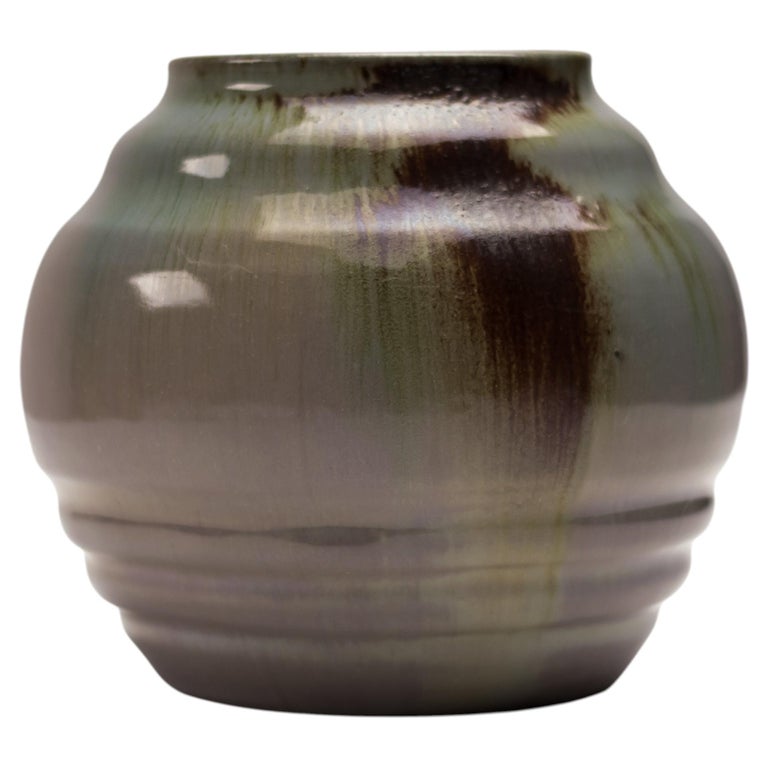
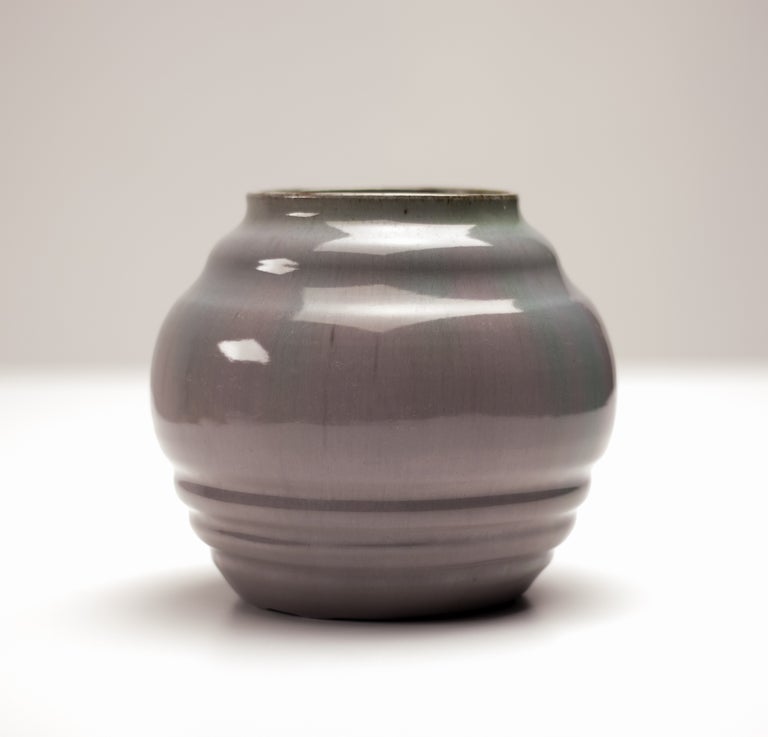
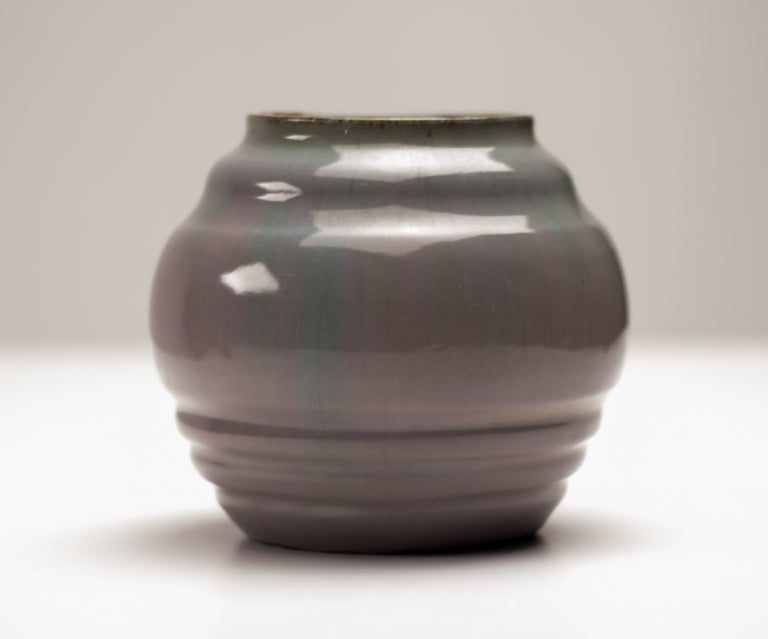
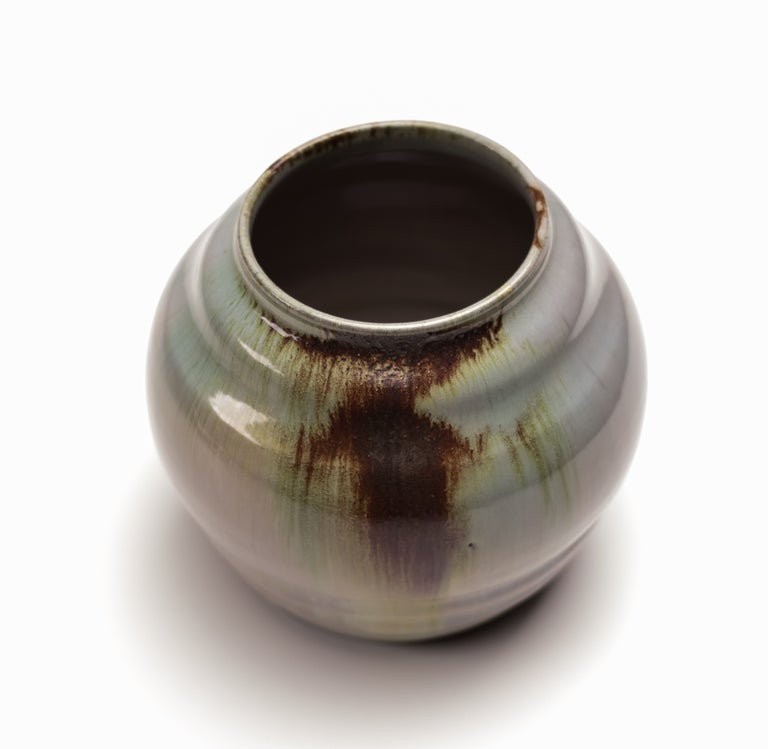
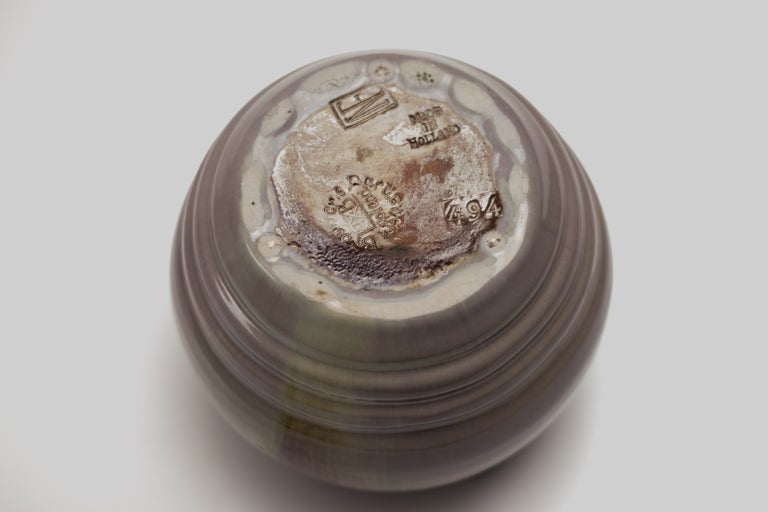
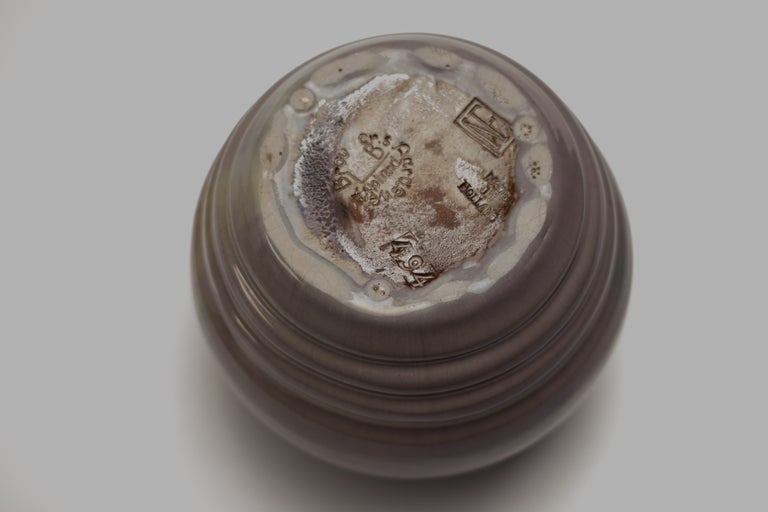
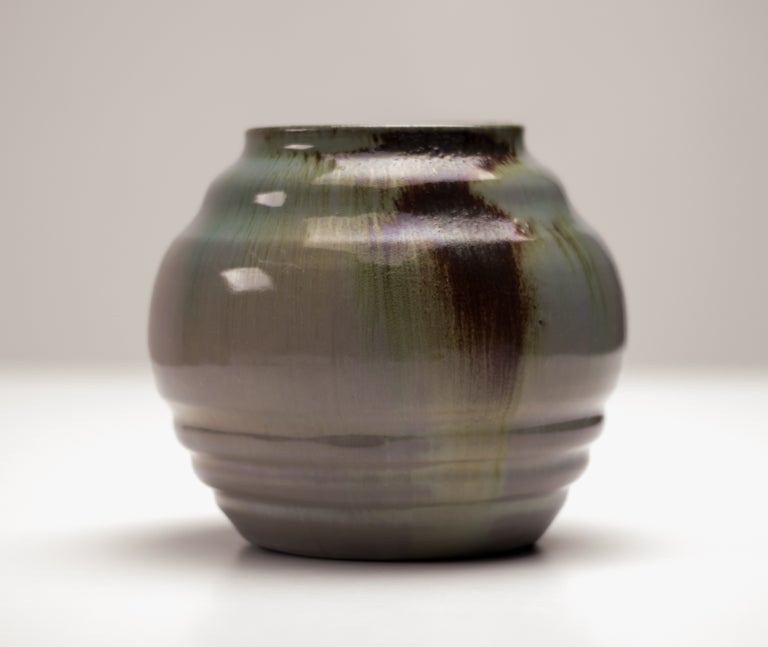
A beautiful early 20th-century studio vase by Willem Coenraad Brouwer, one of the most inventive Dutch ceramists of his time. Brouwer’s pottery in Leiderdorp became known for richly glazed, hand-finished wares that sit at the meeting point of Art Nouveau, the Amsterdam School and Art Deco, and today his work is sought after by collectors of Dutch ceramics and early modern design. The vase has a full, rounded body, gently stepped at the shoulder and finished at the base with a series of fine, turned rings that give the form a rhythmic, architectural quality. The glaze is the real glory of the piece. A glossy, smooth lilac-grey ground is veiled with soft green, and across one side, thick drips of deep brown-black glaze run down from the neck in expressive, vertical streaks. The colours shift and merge with the light, giving the surface an almost iridescent depth that varies from every angle. Such flowing, painterly effects were a hallmark of Brouwer’s glaze technique and make every piece unique. The base is marked with the artist’s maker’s stamp and numbered 494, which confirms its origin and helps to identify the model. Compact enough to sit on a desk, shelf or side table, the vase is substantial enough to hold its own as a sculptural object, with or without flowers. It will bring colour and warmth to a modern interior, and is a natural companion to Art Deco, Amsterdam School and mid-century pieces. Designer: W.C. Brouwer (Dutch) Manufacturer: Brouwer’s Leiderdorp, the Netherlands Period: Early 20th century Materials: Glazed earthenware Dimensions: Height 15 cm (5.9 in), diameter 17 cm (6.7 in) Marks: Marked to the base with the artist’s maker’s stamp and numbered 494.